Hunt, Secure, Track
Sphex builds control infrastructure for autonomous AI: deterministic enforcement at the point of execution, not another layer of probabilistic monitoring.
We started Sphex from opposite sides of the same problem. One of us spent two years on Microsoft’s AI Red Team, breaking agentic systems for a living and discovering how they fail, and how often “probably safe” turns out not to be. The other spent close to fifteen years at Microsoft Research working on cryptography and information flow control (IFC), building the mathematical foundations for systems constructed so certain failure modes cannot occur. Attack and defence, from the same research lineage, arriving at the same conclusion: agent security built on prediction has a hard ceiling, and the industry is hitting it.
Sphex exists because patching that ceiling with more scanning, heuristics, and observability dashboards does not move it. It requires deterministic infrastructure, built the way real infrastructure is built: from formal methods and peer-reviewed research, not another guardrail bolted onto an unpredictable loop.
We are a small, research-led team based in Cambridge, UK, drawing from one of the world’s deepest benches of formal-methods and security research talent. We intend to stay small and precise for as long as that serves the work better than scaling fast does. We would rather ship something we can defend under technical scrutiny than something that merely sounds impressive in a deck. That is a standard we hold our own claims to as rigorously as we hold anyone else’s.
Who We Are
Sphex was founded in Cambridge, UK by two former Microsoft researchers approaching the problem from opposite sides: one from the attacker's seat, breaking autonomous agents to expose where probabilistic mitigations fail; the other building the mathematical foundations to defend them.
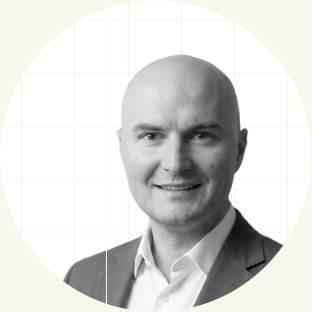
Dan Jones — CEO
Systematizing Agentic Risk
Dan spent seven years at Microsoft, including five in M365 Research and two on the Microsoft AI Red Team, breaking agentic systems to discover precisely how and where they fail in production. A mathematician by training, he began his career in quantitative finance before transitioning into NLP, machine learning, and security research at Microsoft scale. He holds a PhD in Algebraic Topology, advises MITRE and OWASP on AI security, and is a founding member of OWASP's Agentic Research Council. Dan co-founded Sphex to translate the failure modes he exploited repeatedly as an attacker into deterministic infrastructure that makes them structurally impossible.

Santiago Zanella-Béguelin — CTO
Formal Verification & Cryptographic Control
Santiago spent close to 15 years at Microsoft Research and Azure Research, leading projects at the intersection of cryptography, formal methods, programming languages, and AI security and privacy. He is the lead author of FIDES, a system to secure agentic AI systems with information-flow control (published at NeurIPS 2026) and the foundation upon which Sphex is built. In 2026, Santiago received the prestigious CRYPTO Test-of-Time Award from the International Association for Cryptologic Research for his foundational work on computer-aided verification of cryptographic proofs. He holds a PhD in Computer Science from École des Mines de Paris, with deep specialization in programming language theory, formal methods, and provable security.

Nature solved deterministic execution long before we gave it a name.
Partners and Backers
Partnerships
Backed By
Angel Investors From
Ex
Enforce control over your agents.
Start with a read-only Trace Audit: zero production footprint, actionable findings in under 24 hours.
Book a Trace Audit